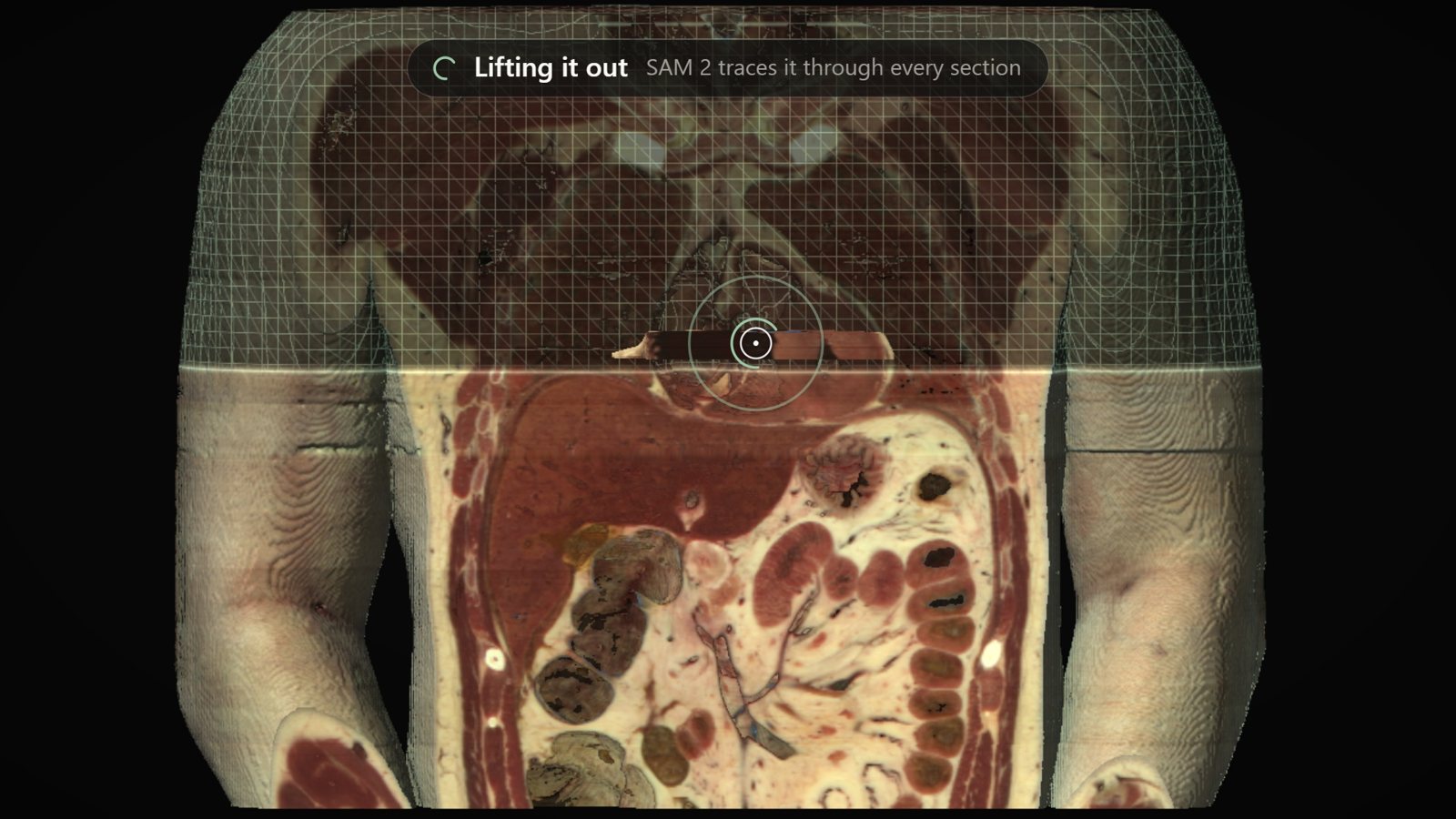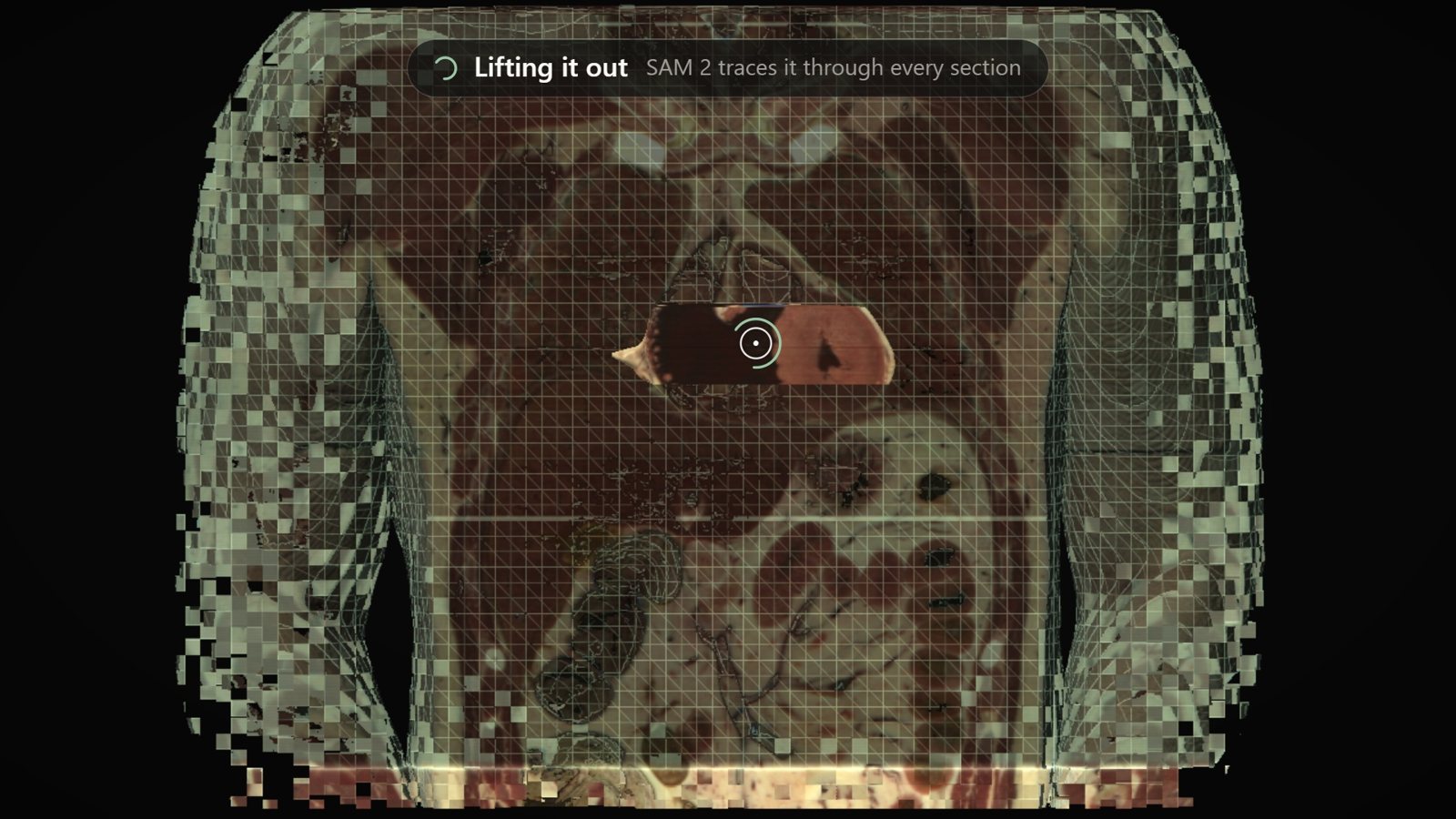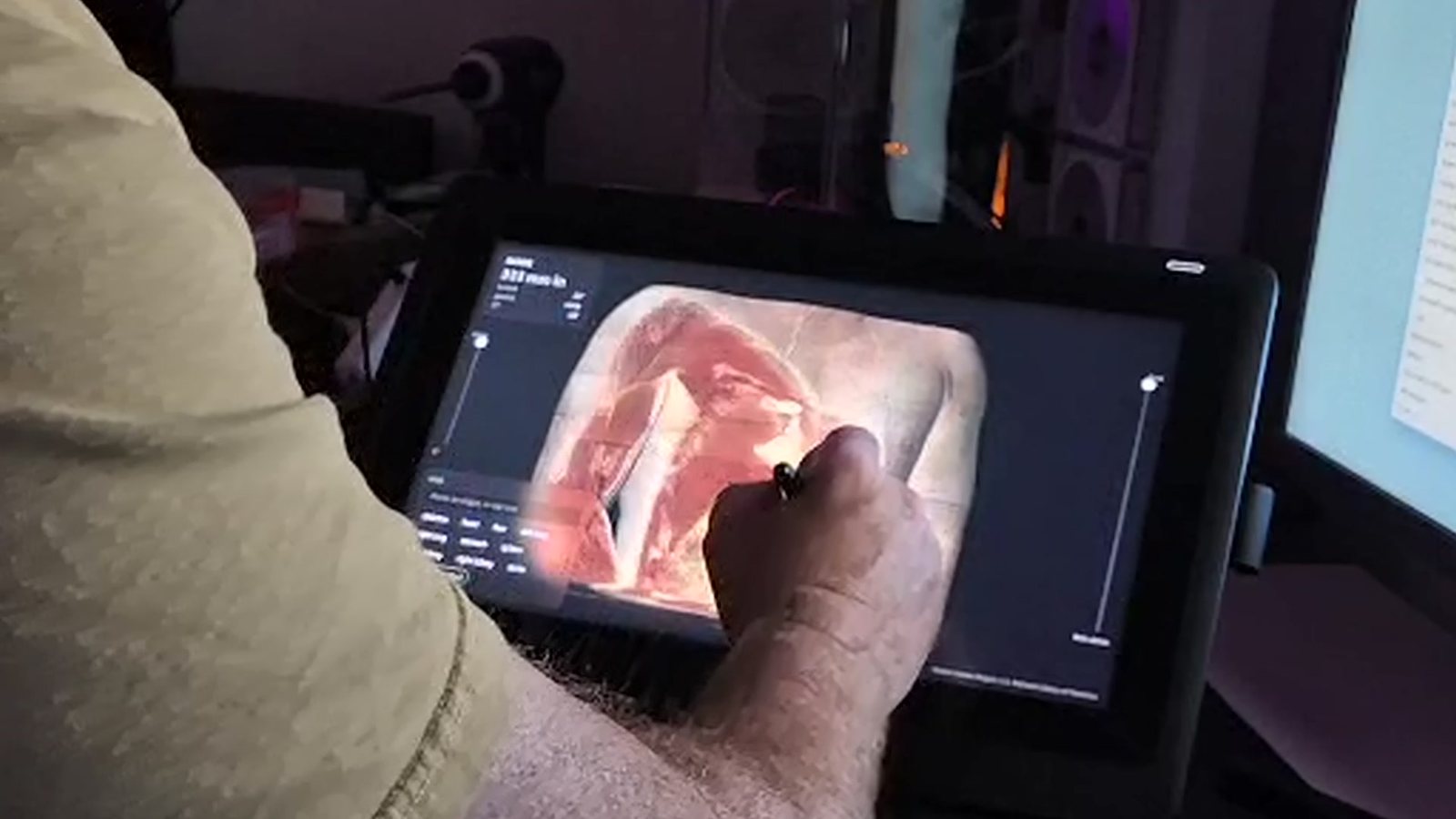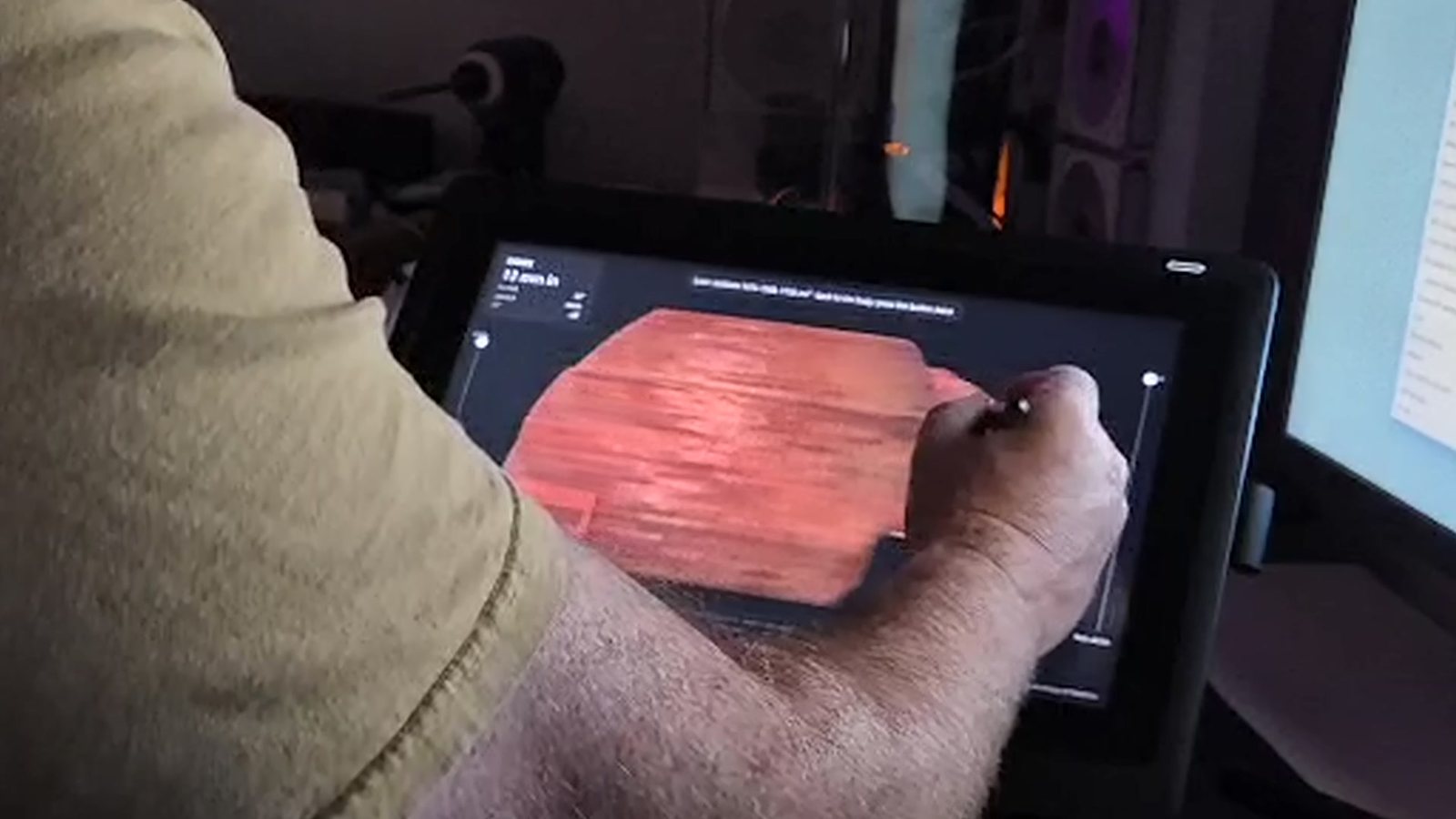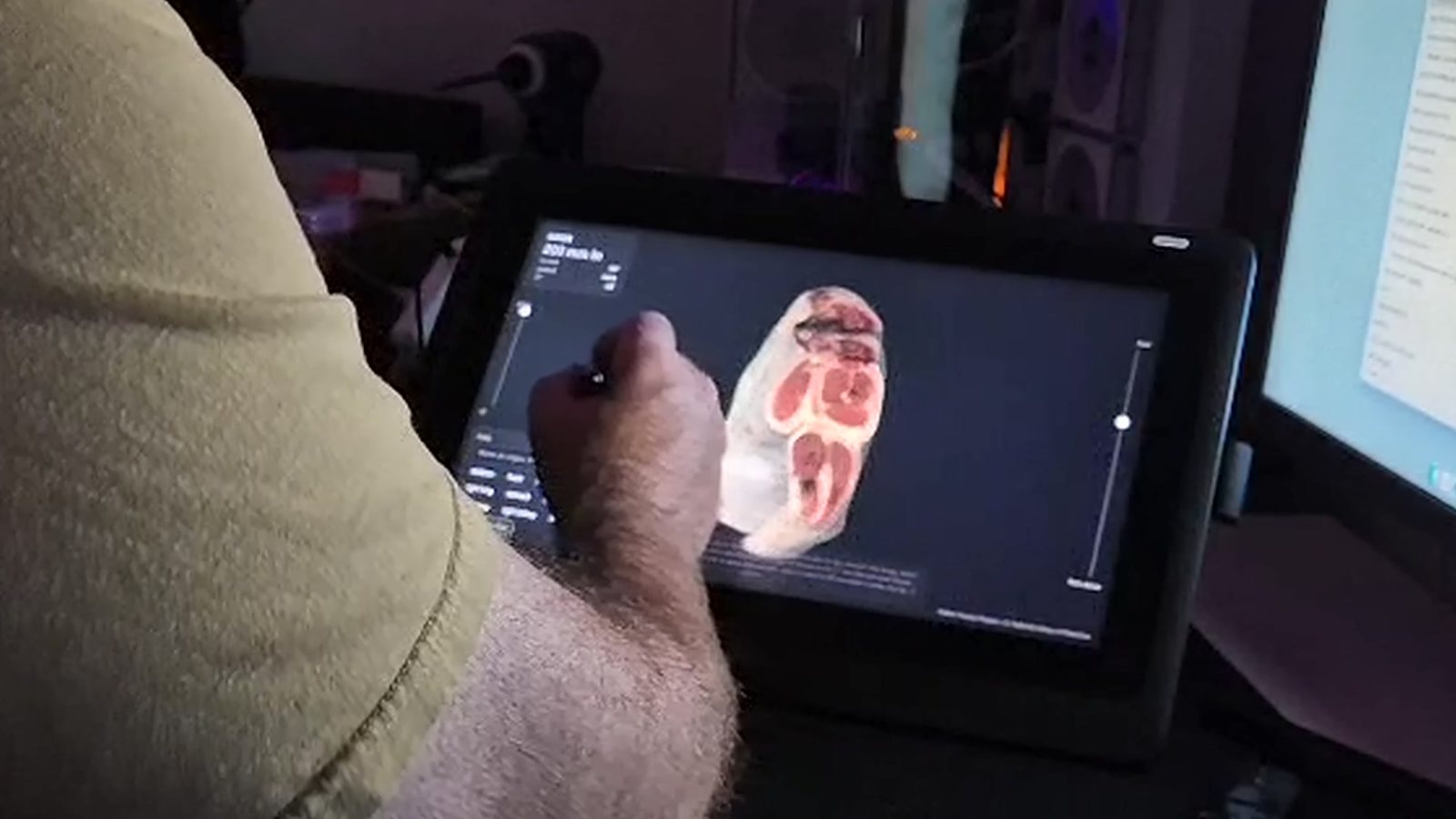
INSIDE is imaging software you work with a pen. The slices become a body in 3D, AI segments the organ you point at, and finds one when you ask for it by name.
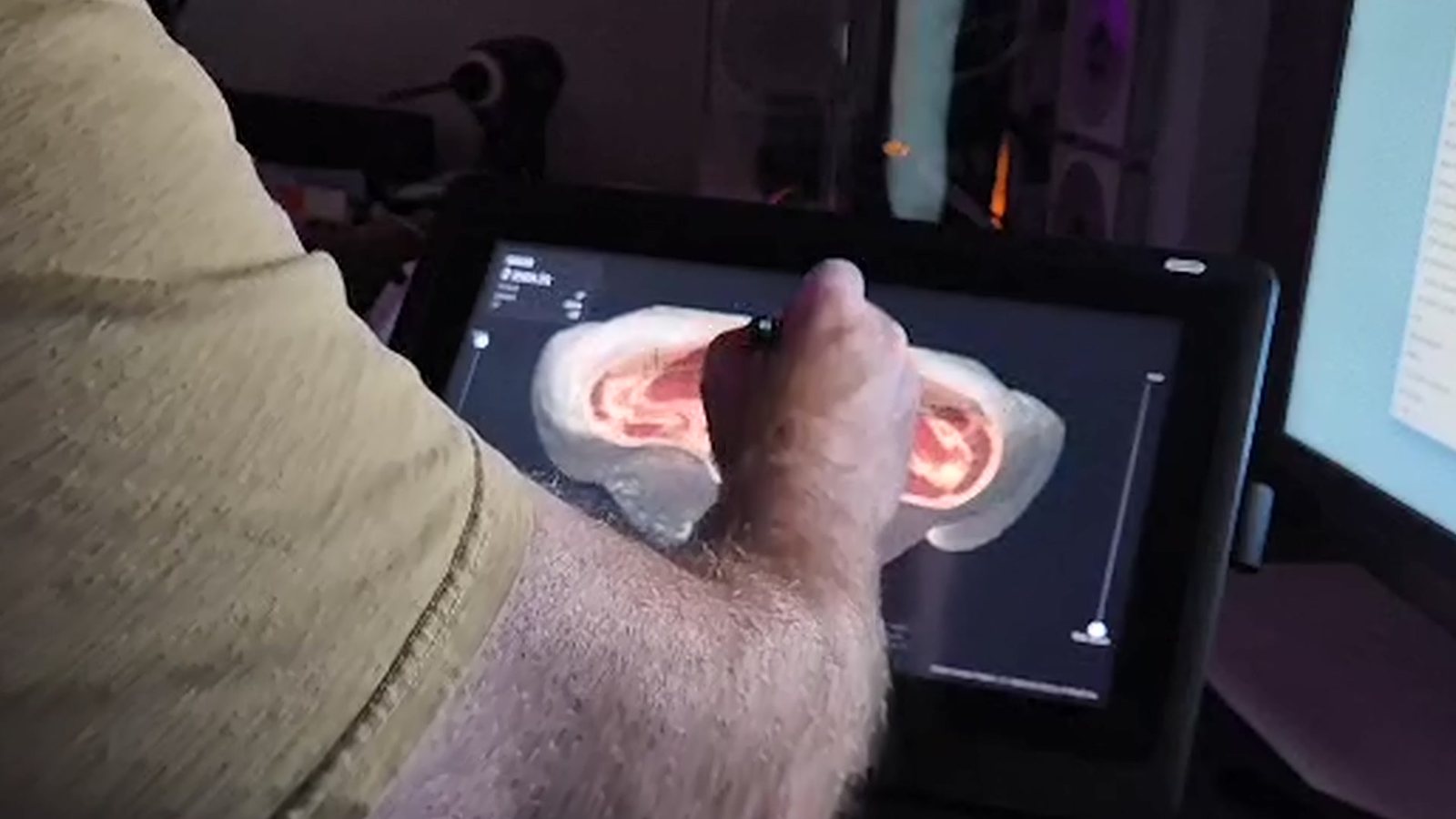
The film is rendered frame by frame from the real page on my PC's GPU, with my own hand and pen on the Cintiq cut in between. One thing is sped up: a real lift takes about 45 seconds, the film shows it in one. Sound on.
01What it does
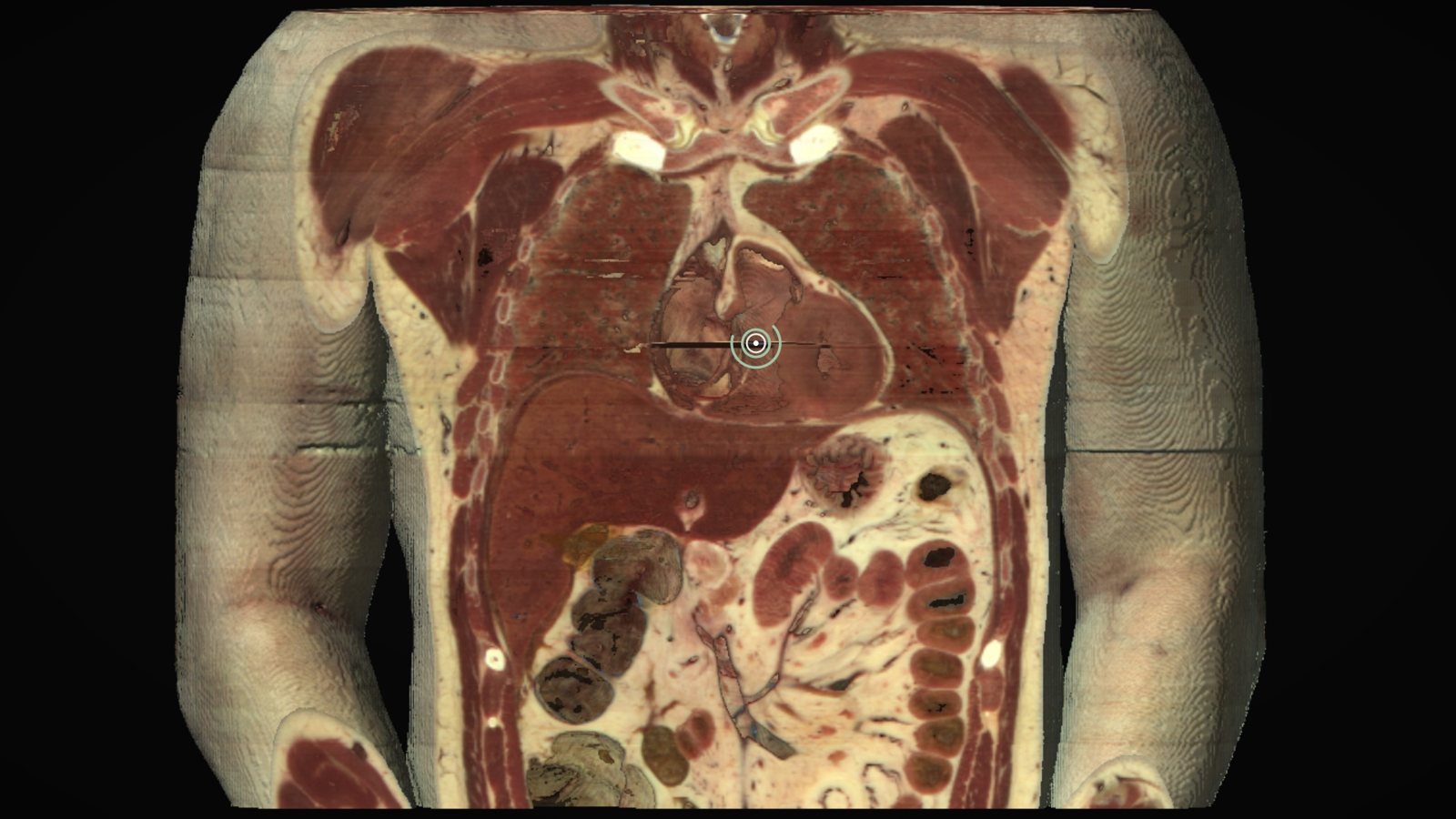
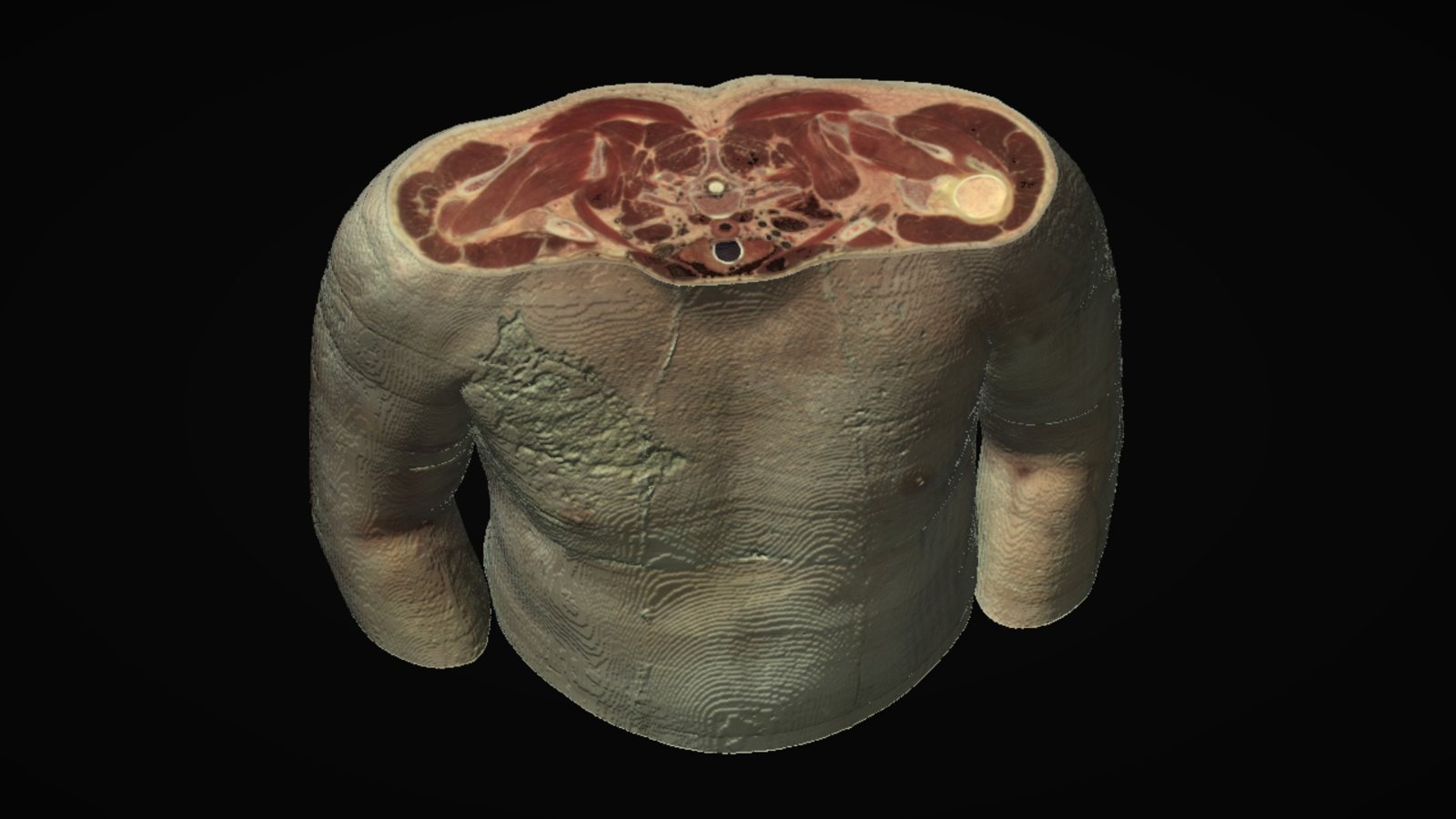
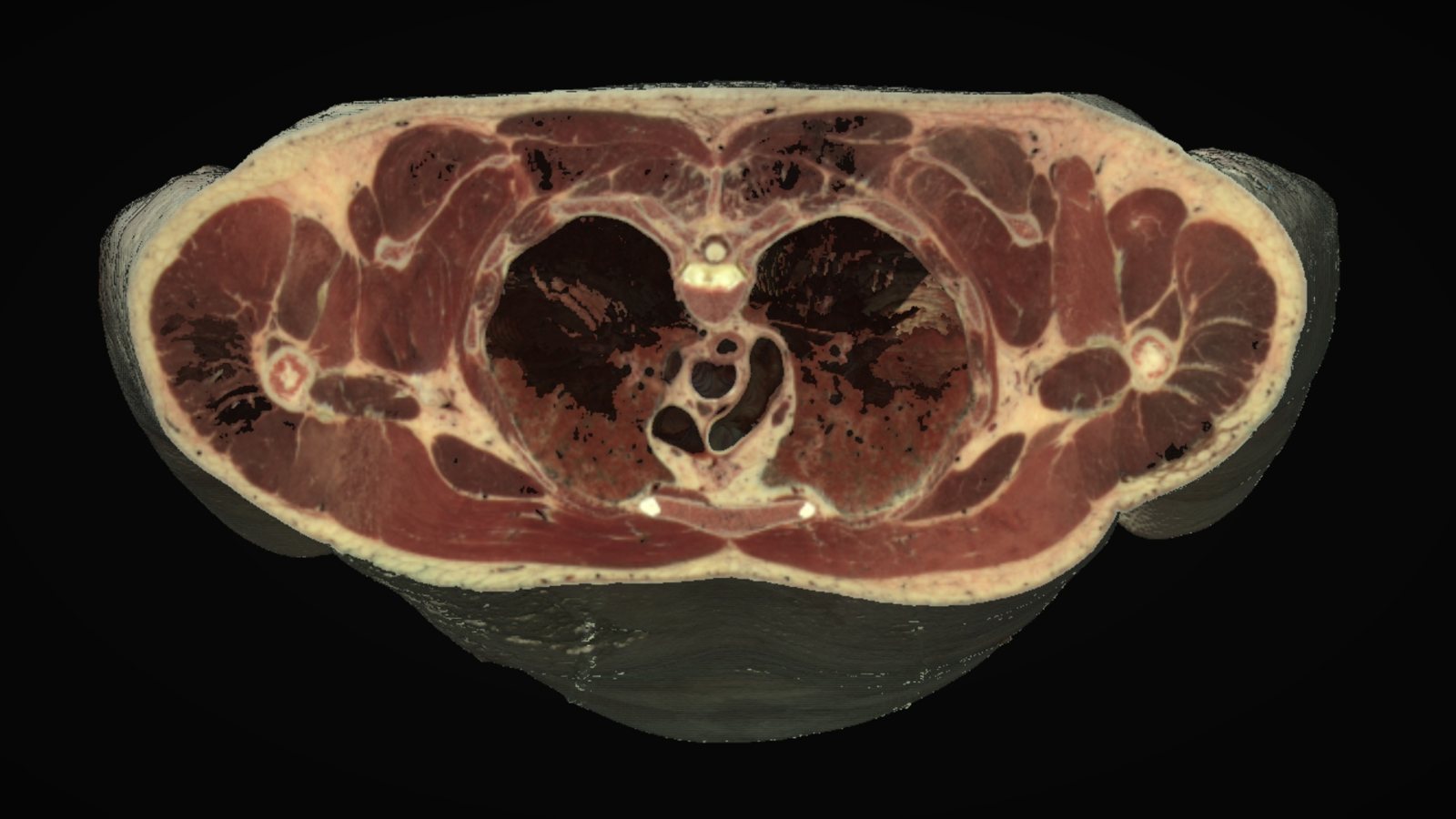
Left and right turn the body, down cuts into it, pressure peels it from the skin in. A slider tips it to a view from above, so the cut becomes an axial section.
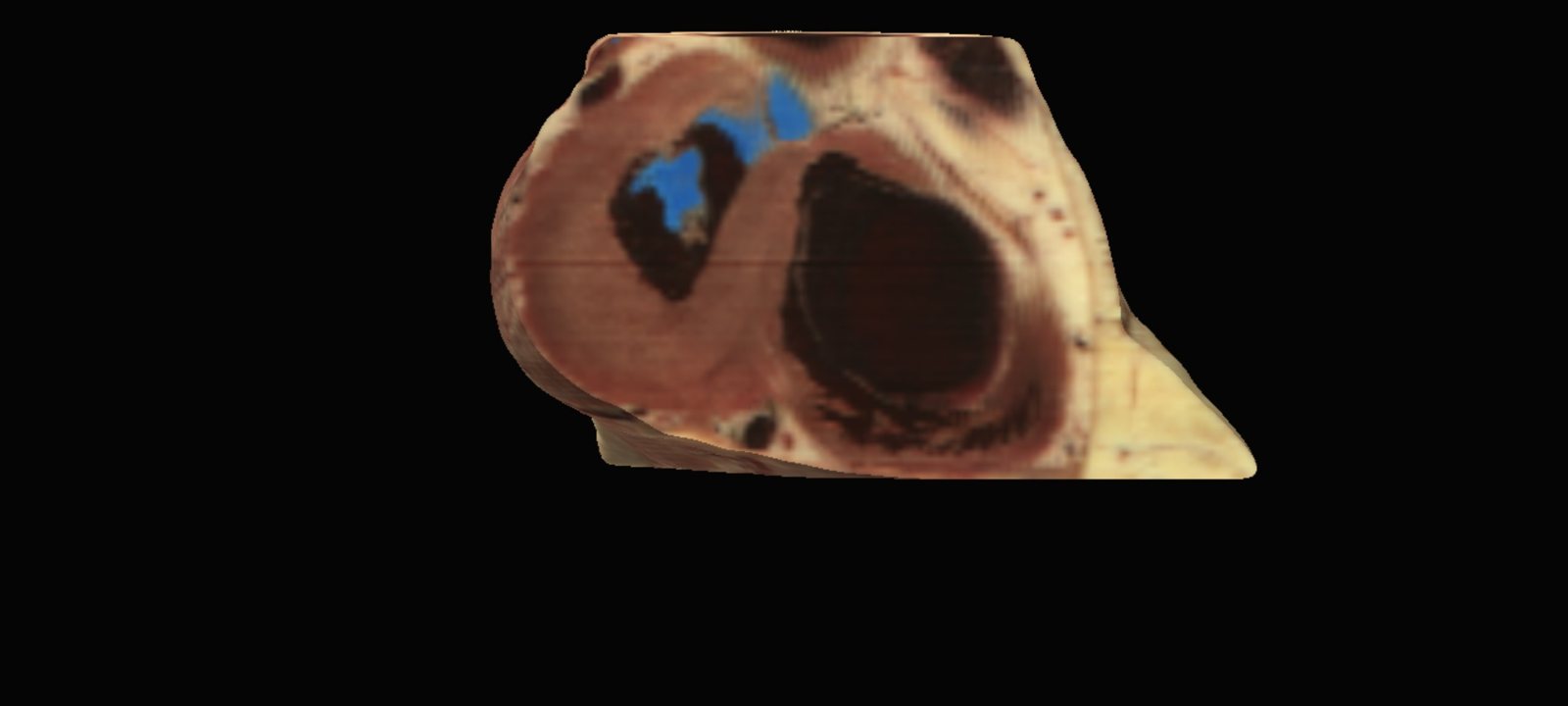
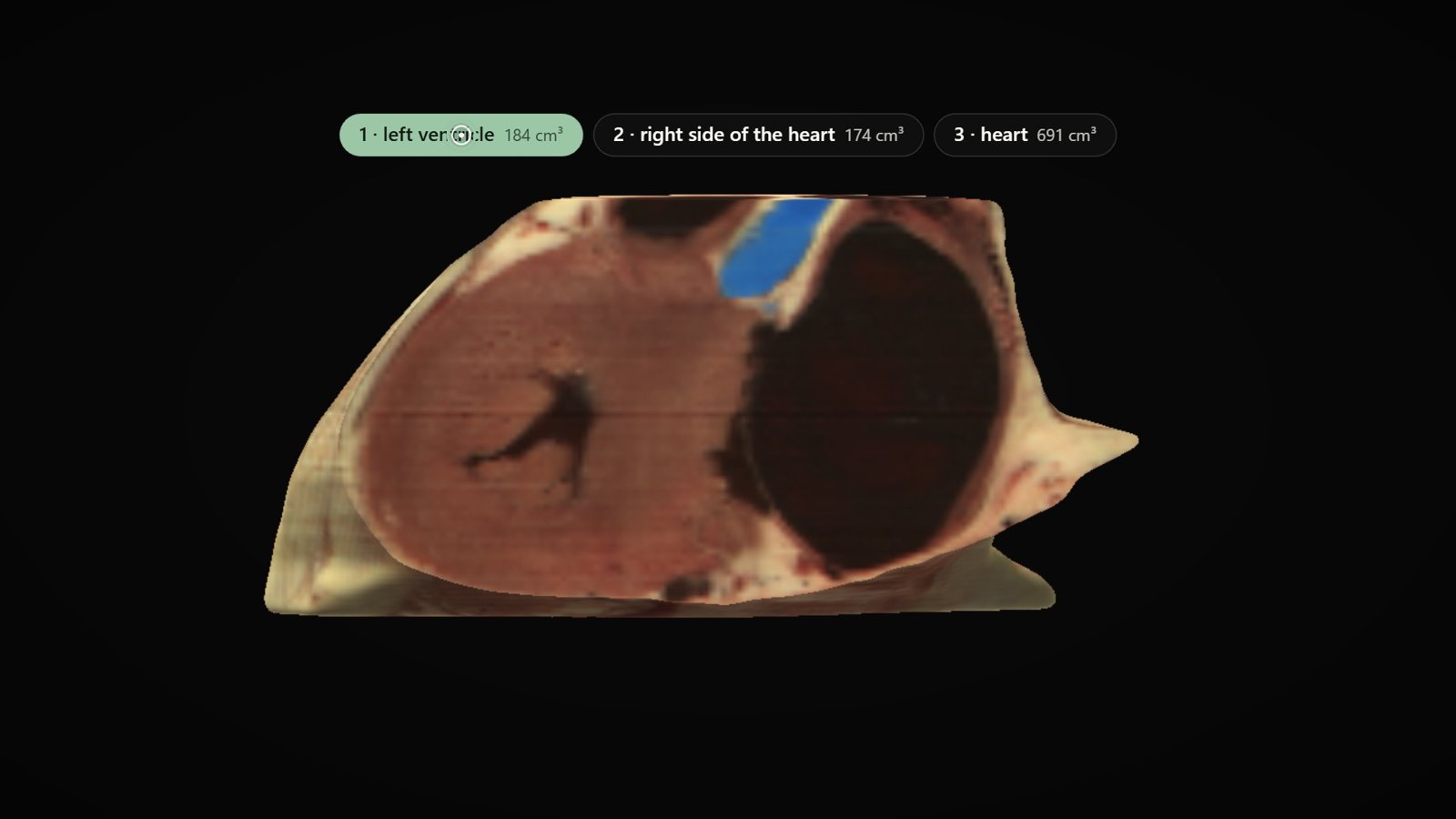
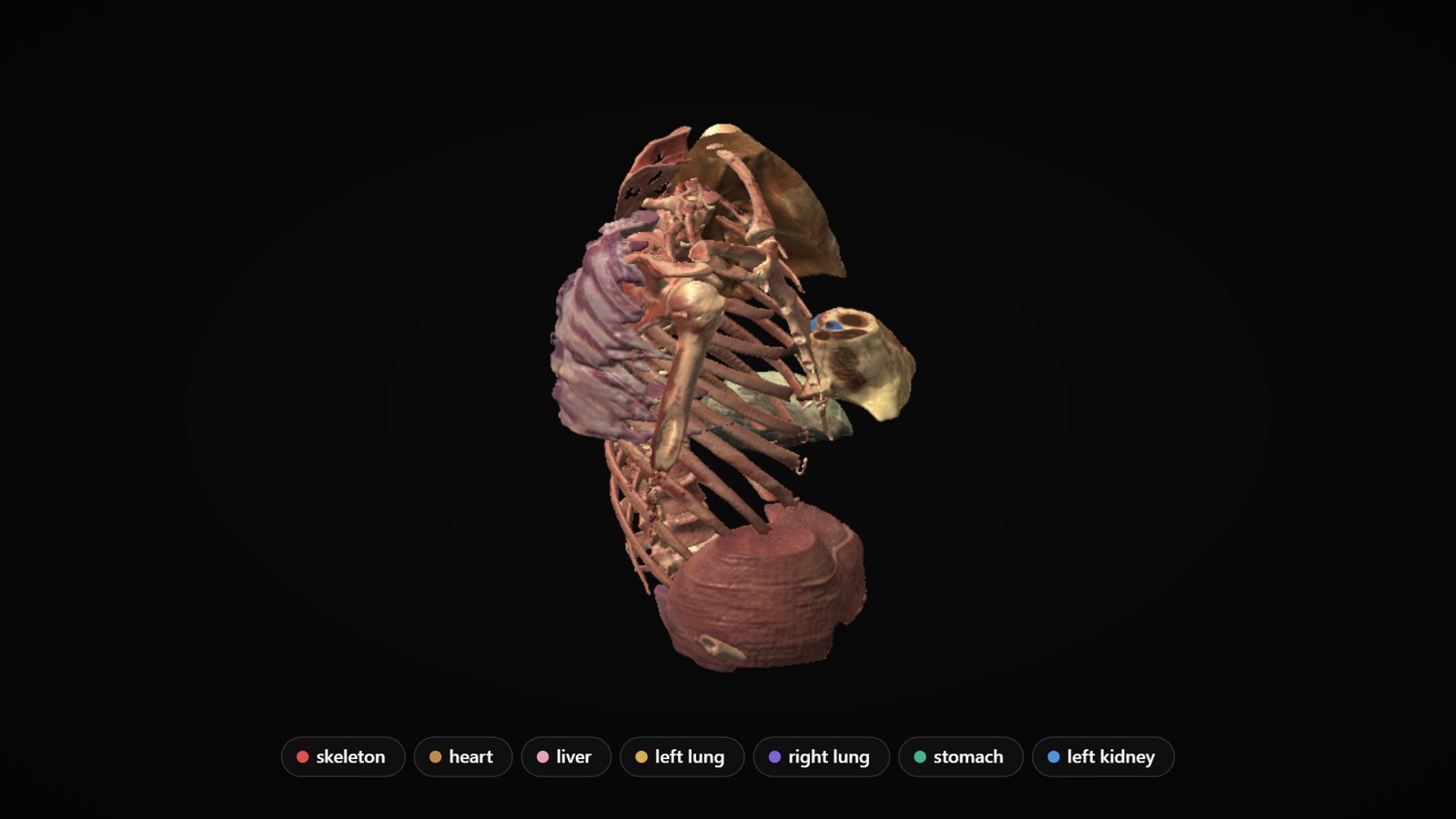
Hold the pen's button to freeze the view, press twice on the organ. SAM 2 traces it through all 409 sections, Claude names it and says where it really ends.
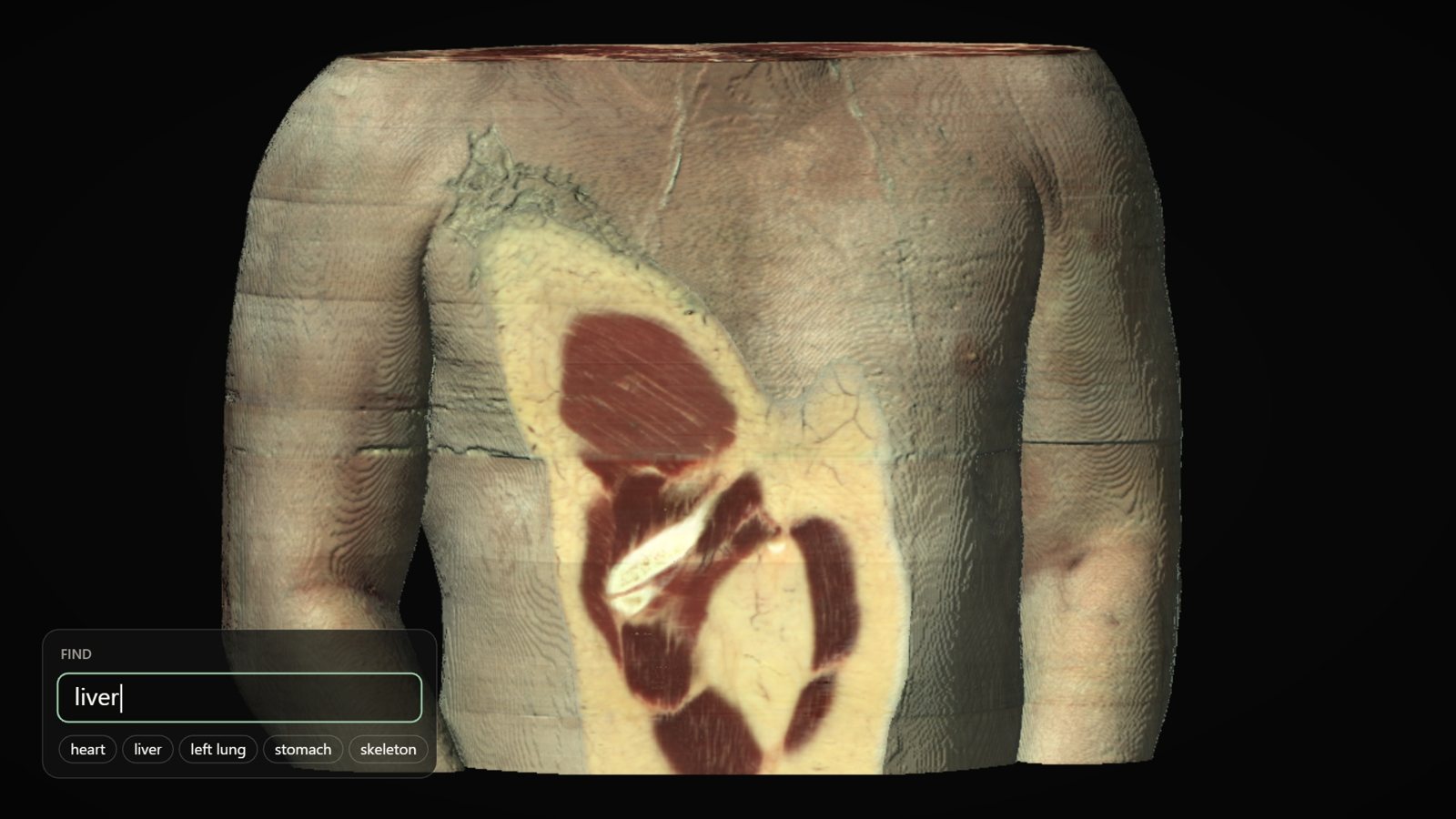
Type or tap "liver". Claude looks through the sections, picks one and a point inside the organ, and the same tracing takes it from there.
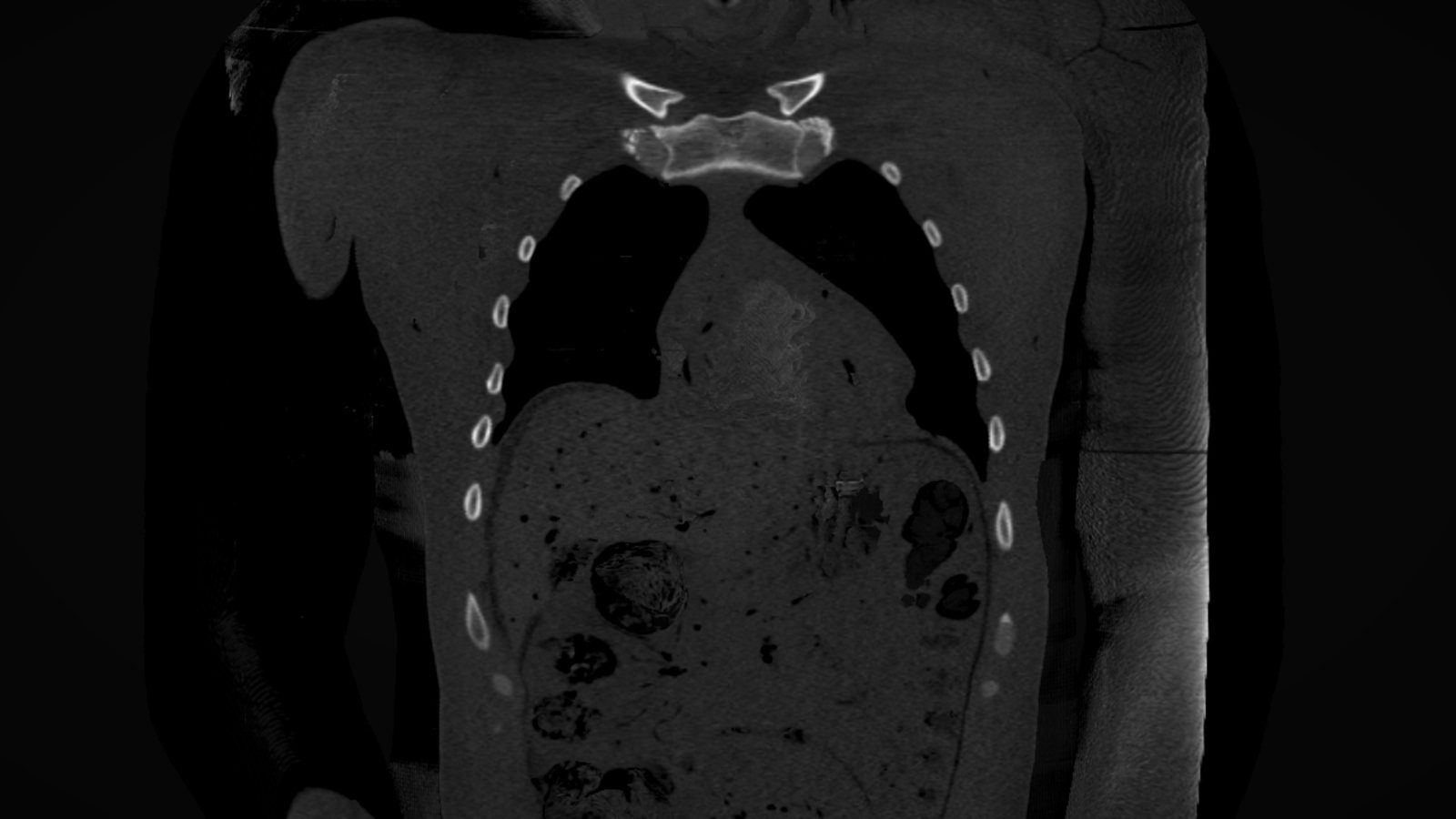
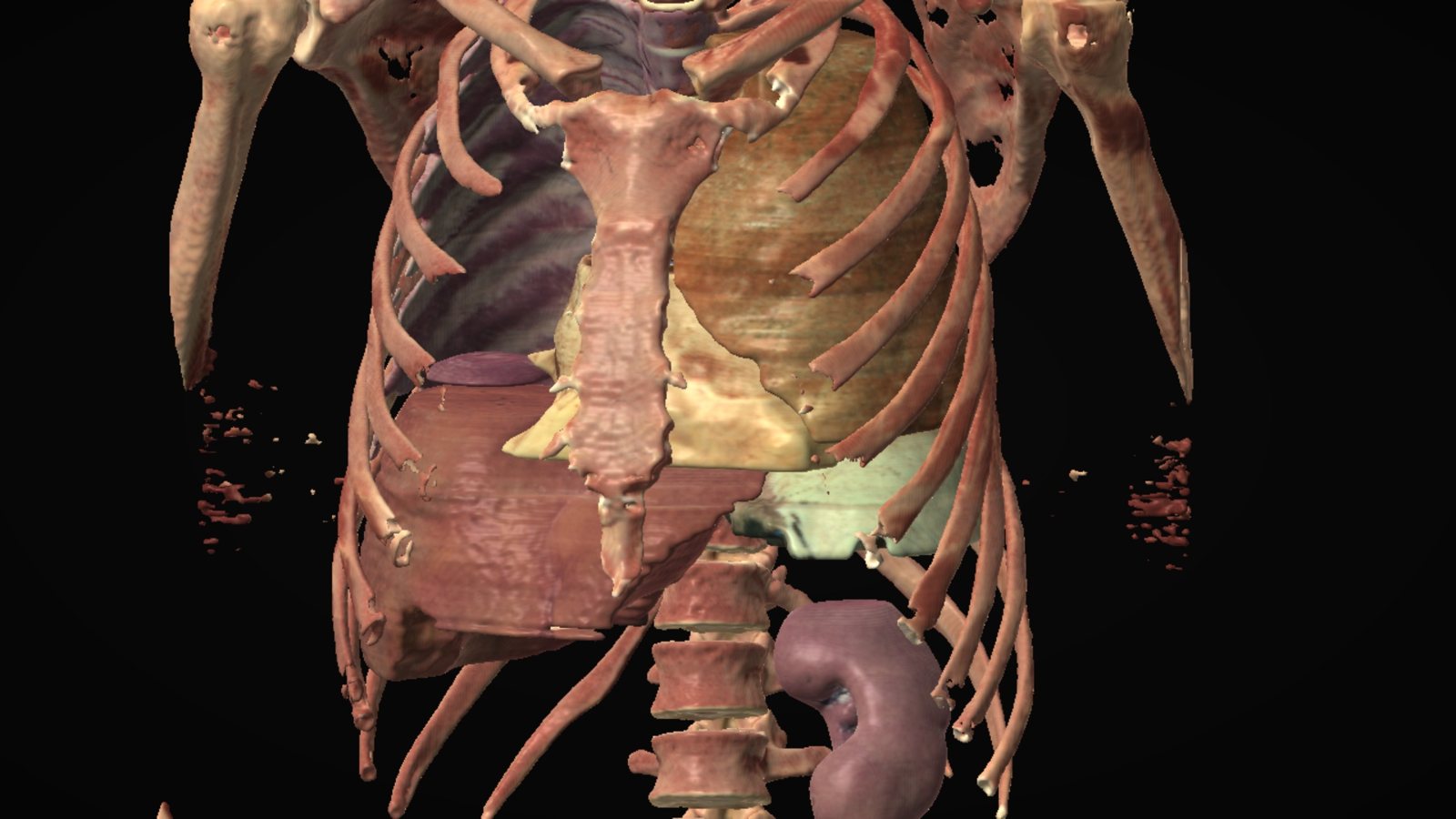
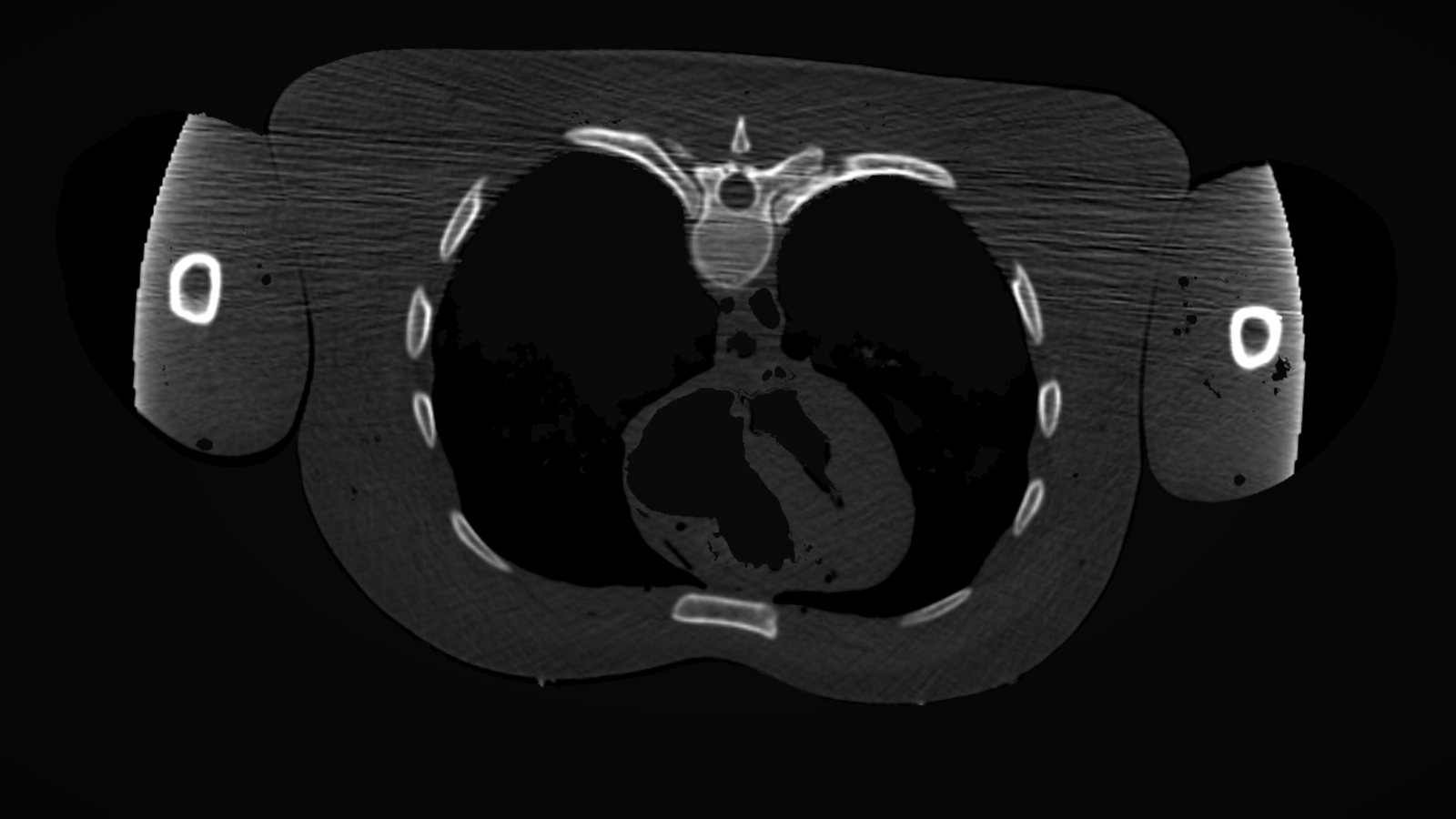
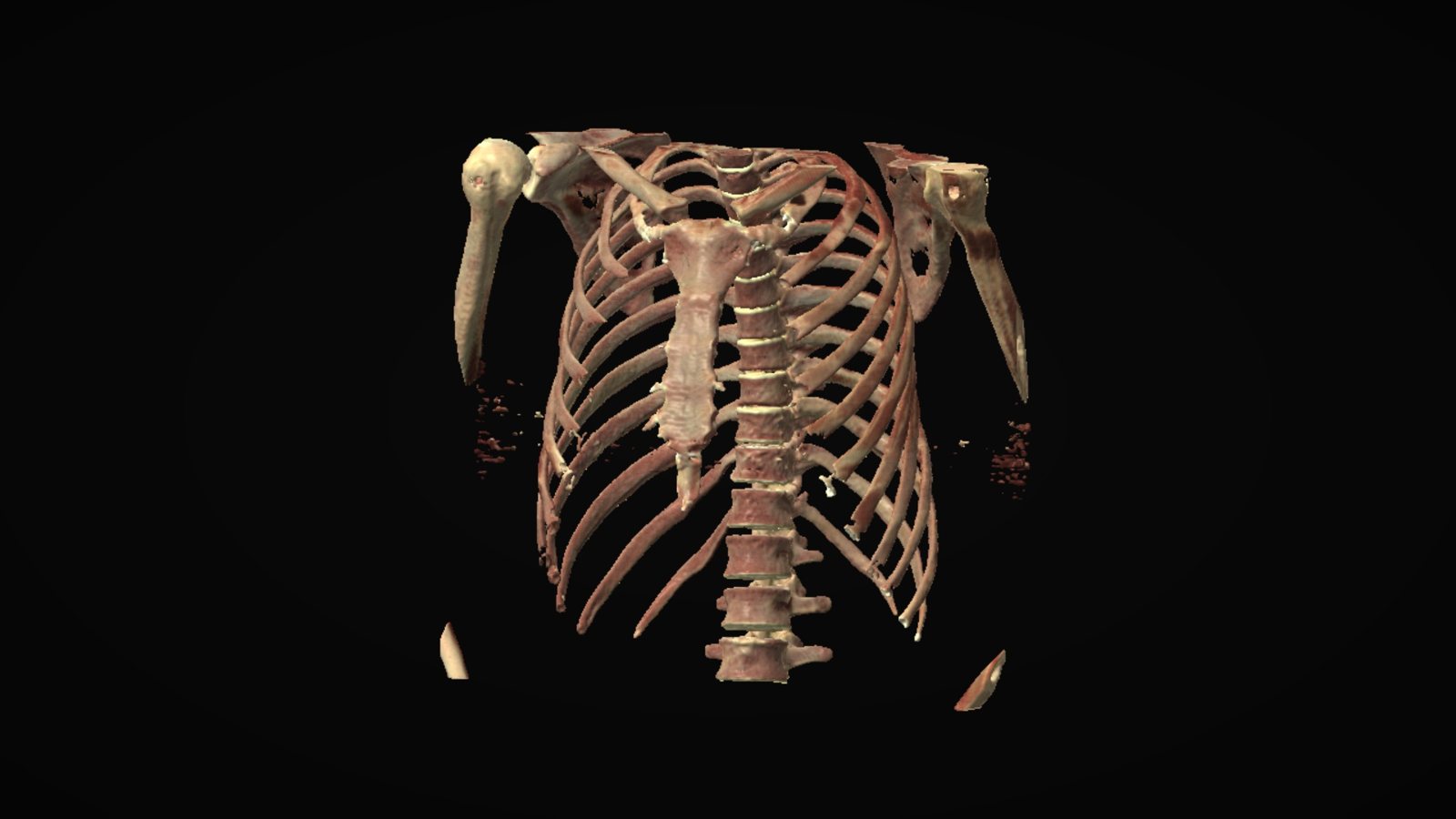
The body's own CT, lined up with the sections. A second slider blends the cut from tissue to CT; bone comes straight out of it as a skeleton.
02The lift
The moment the organ comes out is the product's whole idea, so it gets its own animation: a scan line turns the body into a fine mesh, the mesh falls apart into cubes from the outside in, and only the organ is left.


03On the Cintiq
It runs on a Wacom Cintiq 16, a screen you draw on. The pen's tilt, pressure and side button are all part of it, so it feels closer to holding a scalpel than to clicking through a viewer.
04Every layer


05How it works
The page marches rays through the whole volume in WebGL2, 610 by 345 by 409 voxels at about a millimetre each. A small server on the same PC runs the segmentation and asks Claude what it is looking at.
06What fought back
Traced section by section, the heart's outline kept going up into the aorta and the great vessels. A size rule couldn't tell where to stop.
Claude looks at a montage of every eighth section, names what each outline really holds and gives the range. It also names the levels: the left ventricle, the right side, the whole heart.
SAM 3 finds things by name, which sounded perfect. On this body it found the heart in 0 of 150 sections, and called a slice "meat" with 85% confidence.
Stayed on SAM 2, where a click says where, and let Claude do the naming and the finding.
The frozen CT of the same body is Unix-compressed GE Genesis files, and it doesn't line up with the photographed sections: other pixel size, other centre, front and back flipped.
Wrote the decoder, then lined each CT slice up with the body's outline in the photographs. Bone above 200 HU became the skeleton.
Hold the button to freeze the view, press twice to lift. On the Cintiq the view kept jumping: Windows slips mouse events in while the pen's button is down.
Logged the real presses, measured the rhythm (a second between them), kept the view still for that second and ignored mouse events while a pen is near.
07Where it stands
08Under the hood